Learning to read and draw Hebrew letters is a challenge. My initial attempts to copy an alphabet were soon thwarted by my unwillingness to be bound or restrained by the strict laws governing the formal writing of letters. I am not destined to be a Sofer (Jewish scribe). Nevertheless, the letter forms and language remain fascinating. The four abstract drawings here are based on my practice pieces. The first (above) presents a conundrum: while creating a satisfying abstract design, I didn't realize until I was 'finished' that the letters were upside down! This begs the question: how is the reader of Hebrew going to interpret this? Do tell me.
Seeking a more lyrical solution I made a number of composite drawings using a broad brush and nib pen. Again it is the word בְּרֵאשִׁית, (Bereshit) meaning Genesis, or 'in the beginning'.
Then I turned to the cursive alphabet that had first confused me. Here I felt there was more freedom for creating adventurous designs. Which, if any of these pieces will be included in my interpretation of Carlyle's Sartor Resartus & Heroes, remains to be seen . . .
Blog by Artist David Esslemont about design, illustration, printmaking, bookbinding, and publishing – for everyone interested in books and creativity.
Monday, September 19, 2011
Parian marble, Arundel-marble, Aeschylus, and Greece
Thomas Carlyle in Heroes . . . makes reference to 'Arundel-marble', obliquely referring to the Parian Marble or Chronicle, an early Greek chronological inscription. It is just possible to decipher the words in the continuous string of incised capitals, and colour helps in this calligraphic rendering of one typical entry.
Treating the letters with less reverence [perhaps] and injecting some lyricism it is harder to read, but only if we read Greek, so does it matter if it is almost illegible? Perhaps not, as its purpose is chiefly to be a decorative foil and accompaniment to the text. What is lost is any suggestion that the source of the text were letters are carved in marble.
The inscription translates as: 'From when Aeschylus the poet first won with a tragedy, and Euripides the poet was born, and Stesichorus the poet [arrived] in Greece, 222 years, when Philocrates was archon in Athens'. It dates to around 850 BC.
I will confess, I do not read Greek, nevertheless it is fascinating to discover in this sentence the roots of English words such as tragedy (Greek: τραγῳδία, tragōidia), written here as ΤΡΑΓΩΙΔΙΑΙ and poets, such as Aeschylus (Greek: Αἰσχύλος, Aiskhulos) ΑΕΣΧΥΛΟΣ, and the Greek for Greece (Elláda) which is instantly recognizable in the inscription as ΕΛΛΑΔΑ.
Treating the letters with less reverence [perhaps] and injecting some lyricism it is harder to read, but only if we read Greek, so does it matter if it is almost illegible? Perhaps not, as its purpose is chiefly to be a decorative foil and accompaniment to the text. What is lost is any suggestion that the source of the text were letters are carved in marble.
The inscription translates as: 'From when Aeschylus the poet first won with a tragedy, and Euripides the poet was born, and Stesichorus the poet [arrived] in Greece, 222 years, when Philocrates was archon in Athens'. It dates to around 850 BC.
I will confess, I do not read Greek, nevertheless it is fascinating to discover in this sentence the roots of English words such as tragedy (Greek: τραγῳδία, tragōidia), written here as ΤΡΑΓΩΙΔΙΑΙ and poets, such as Aeschylus (Greek: Αἰσχύλος, Aiskhulos) ΑΕΣΧΥΛΟΣ, and the Greek for Greece (Elláda) which is instantly recognizable in the inscription as ΕΛΛΑΔΑ.
Thursday, September 15, 2011
בְּרֵאשִׁית
'In the beginning', and, 'Genesis'.
In On heroes, hero-worship and the heroic in history Thomas Carlyle makes several references to the 'divine . . .' and 'sacred Hebrew Book'. In Sartor Resartus he refers to 'young Ishmael' in the 'destitution of the wild desert'. Throughout both books he includes many biblical references and allusions. For my illustrations, I looked for a quotation, and then searched for an original source – and I found Hebrew texts.
The history, meaning and beauty of the letterforms are fascinating and I began to draw and learn a little of the Alephbet.
The first problem I encountered was the inability of Microsoft Word and Adobe InDesign to render the text as right to left (RTL) reading. Curiously my Firefox browser, Apple Mail and TextEdit did work, which helped when using the Hebrew keyboard layout.
Secondly, my insatiable thirst for language was hampered by a new alphabet and the myriad forms it takes. Besides the formal pen or brush-drawn block lettering based on a square of three kulmusim that follows strict laws concerning how it must be written, there are the usual variety of modern seriffed and sans-seriffed fonts, a manual print form and a cursive script used for handwriting.
Learning to recognize the various letter forms and their sound is a challenge and the following Web site has proved very useful: http://www.hebrew4christians.com/index.html. Here you can listen to the sounds of individual letters and how they sound together as words and in sentences such as this blessing upon smelling fragrant fruit:
Barukh attah Adonai eloheinu melekh ha-olam, ha-noten re-ach tov bapperot.
The calligraphy is just that, a beginning – let me know what you think, am I breaking rules?
Thursday, September 8, 2011
Carlyle, Sartor Resartus and Heroes: Tasso, Shakespeare, Dante, Odin, Rousseau, Burke, Johnson etc
A few images from a new project: bibliographic references in Thomas Carlyle's Sartor Resartus and On heroes, hero-worship and the heroic in history.
Having discovered that Borges was inspired by Sartor I too began reading and found among his allusions and quotations much that was amusing and inspiring. In particular, his references to books and printing, that I now propose to present in book form (both digital and conventional), illustrated with a selection of quotations by Carlyle's 'cast of players'.
(above and below)
Torquato Tasso describes the enchantress Armida in his sixteenth-century poem, Jerusalem delivered.
Carlyle despised "Fashionable Novels" and contrives to reference Pelham, or the adventures of a gentleman by Edward Bulwer-Lytton. (below)
One of Carlyle's great heroes was Dante, and there are many allusions and quotes from his Divine Comedy. "Se tu segui tua stella . . .", If thy follow thy star . . . (below)
Dante again 'Quivi sospiri, pianti, ed alti guai.' (There sighs, and sorrows and heart-rending cries). (below)
'Odin's Runes', says Carlyle, 'were the first form of the work of a Hero'. Here in runic script is a stanza from Hávamál, The words of Odin the high one from the Poetic Edda, in which Odin receives the runes. (below)
Odin's runes, this time in Icelandic script. (below) You can listen to a dramatic reading on Youtube here.
Unlucky Abelard is mentioned in the context of how books have changed the world and the development of universities. Here a quote from the Prologue to Sic et non. (below)
Burke, Johnson, Shakespeare, Byron and Coleridge to follow . . .
Sunday, August 28, 2011
Shakespeare's King Lear & Hurricane Irene
Blow, windes, & crack your cheeks; Rage, blow
You Cataracts and Hyrricano’s, spout,
Till you haue drench’d our Steeples, drown the Cockes.
You Sulph’rous and Thought-executing Fires,
Vaunt-curriors to Oak-cleauing Thunderbolts,
Sindge my white head. And thou all-shaking Thunder,
Strike flat the thicke Rotundity o’ th’ world,
Cracke Natures moulds, all germaines spill at once,
That makes ingratefull Man.
Thursday, August 25, 2011
Stockhausen In Freundschaft – work in progress
![]() | ||
| In Freundschaft – gallery installation – 1 |
![]() |
| In Freundschaft – gallery installation –2 |
The main challenge is how to represent the linearity of music on a single rectangle and the solution might be a series of paintings. I have made a series of linear drawings in book form, where the pen behaves like an oscilloscope of sorts. One may argue that there is just as much potential in a single painting, given that the piece of music as a whole itself possesses all the lyricism and aesthetic qualities that a painting can offer and I have made several studies with this premise in mind. Currently I have been listening to just a few bars and painting in response; and making enlarged detailed selections, as seen above.
Scale is important, and I am seeking a larger gestural solution, hence these gallery installations – all digital creations, based on a small painting 8 x 5 inches. I am seeking the sonorous qualities seen in paintings by Barnett Newman, Yves Klein and other Color Field painters, together with the gestural lyricism of the action painters such as Jackson Pollock and Cy Twombly.
![]() |
| fr408.2 |
![]() |
| fr408.3 |
![]() |
| fr408.4 |
![]() |
| fr408.5 |
![]() |
| fr408.6 |
![]() |
| fr408.7 |
![]() |
| fr408 |
![]() |
| freundschsft408.1 |
![]() |
| freundschaft408. |
Watch and listen to the piece performed by Han Kim.
Wednesday, August 24, 2011
En homenaje a Jorge Luis Borges, born August 24, 1899
![]() |
| Es una locura laboriosa . . . Text by Jorge Luis Borges Pen and ink drawing by David Esslemont |
"Es una locura laboriosa y empobrecedora la locura de escribir libros muy extensos desarrollando durante quinientas páginas una idea que puede ser contada perfectamente en cinco minutos de narración oral. La mejor forma de ocuparse de ellos es hacer como que esos libros ya existen y ofrecer un sumario, un comentario".
From the Introduction to El jardín de senderos que se bifurcan (The Garden of Forking Paths)
Tuesday, August 23, 2011
Marketing and selling your art online – part two
![]() |
| Looking west over Grasmere, water colour landscape by David Esslemont |
Building your profile
Standing out from or above the crowd is a challenge, to do so online is an even greater challenge, as the crowd is measured in thousands if not millions.
Your customers need to be able to find you and your art online. They do this in a number of ways: by going directly to your Web site, online gallery, blog or whatever, following a link, or searching for you or related subjects. Web site analytics will reveal where direct traffic and referrals are coming from, and what keywords are used when searching. Use your URLs everywhere, and link them. Add them to your e-mail signatures and use your domain's e-mail service e.g. contact david@solmentes.com and people will know where to find you and your work. Ask for reciprocal links with other Web sites, comment on posts, submit your URL's to the search engines directly.
Searching
“What are your customers searching for” begs the question “what are they looking for?” Are they looking for information or advice, or to buy art. I would further ask the question “why?” Addressing this latter question first: perhaps they are looking for a memento, a gift or they simply collect paintings or prints. Perhaps they are looking for a picture to hang in their hallway. Perhaps they are just curious to know more about you and your work. Perhaps they are looking for advice on how to frame a picture, or how to choose a picture for their home. The field is wide and if one is aiming to be in “the right place at the right time” you have to offer the online visitor what they are looking for and, something of value. Artist Lynne Taetzsch provides an excellent example both on her Web site and on her blog.
The chances are their search will include the criteria that will help them find what they are looking for: keywords. So naturally having matching keywords is a big advantage. Relevant keywords as header tags, image tags, link references, titles and body text will help your ratings with the search engines. My advice: work on this now or get someone well versed in SEO (search engine optimization) to do the job, it is important.
Keywords
Let us assume I paint watercolour landscapes of the English Lake District. I would expect all the bold words to be important keywords and ensure their inclusion together with place names, and qualifiers such as morning, evening, dusk, rain, cloud, and lake. If you are selling original framed art and prints, then include those keywords too, if you think it will look good on a wall, in a living room or elsewhere, say so. Keywords can be generated from a text (or Web site) by analyzing the frequency of words used [much as I did with Barack Obama's inaugural address] to find the most often used, or key words. There are many free online keyword generators such as Tocloud that will also produce graphic images, but none that will produce anything quite like I did for the President's speech:
![]() |
| Drawing by David Esslemont from My Fellow Citizens |
Searching Google for “Grasmere watercolour” returns 105,000 results with this link on the first page:
"www.solmentes.com/davidesslemont/wrs.04.html
You +1'd this publicly. Undo
These watercolours were made "in the field" from a perch above Grasmere looking west northwest. They were painted over a number of weeks, in March and April ..."Searching Google Images returns 8,000+ results but fortunately shows my Solmentes logo on the first page! This links to a Facebook post about the Grasmere watercolour being available as a stretched canvas print. The actual water colour image is nine pages further down and links to my online gallery. The image itself is tagged with the title "Looking west over Grasmere, watercolour as stretched canvas print!"
Good luck.
Friday, August 12, 2011
Marketing and selling your art online – part one
Order this print today and have it hanging on your wall next week!
How to market and sell your art online? That is what I entered into the Google search box and in a roundabout way have discovered a whole new world of possibilities.
Marketing is about satisfying customer needs profitably. So to begin you have to ask what are you selling, who are your customers, where are they, and what do they want to pay: it's the four p's – product, people, place and price.
If I earned a penny, or even better a dollar every time someone commented on my work with a "WOW" (in particular when viewing the new digital flowers in the Florilegium Solmentes portfolio), I would be a wealthy man. How can one turn those comments into sales?
I decide to offer the flower prints as signed limited edition prints for $200 each, $150 each for two or more. There was the stumbling block: price. Apart from a strange antipathy towards digital prints such as these (do people realize it took me just as long to create these images as it would to make multi-colour linocuts, for example), the price seems to be the most important factor in turning the "WOW" into a desire to buy the work. At least I had some interest and "AIDA", the old acronym so pertinent to advertising (attention, interest, desire and action), can be applied here.
Going back to the four p's, being in the right place, at the right time with the right product, should give you a better chance of making a sale.
Free online galleries and portfolios abound! But there is the catch, if there are so many, it also means there are MANY other artists also trying to market and sell their work online. So you have to (as my grandmother used to say) "stand out from the crowd". For now I am going to throw a handful of bait in the stream and see if the fish are biting and address the profile issue in the next post.
FineartAmerica offers a free account that allows you to upload images of your artwork and sell prints, on demand in an amazing range of sizes and formats (canvas, matted and framed prints etc). While their offer is enticing with the unlimited number of image uploads, the small print limits the number you can actually sell as "print-on-demand". Unless of course you pay $30 for an upgrade to premium membership. So I did and now they have made money from me but I haven't sold anything, yet. Well done FAA.
PS The yellow blackberry flower print is available in a variety of formats from david-esslemont.artistwebsites.com
Sunday, March 6, 2011
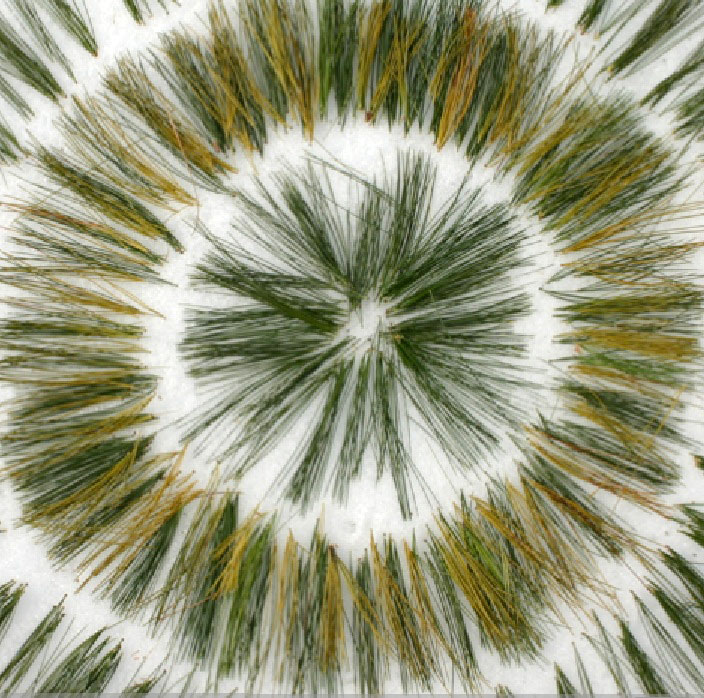
pine needle flower
pine needle drawings
Subscribe to:
Posts (Atom)
Podcast: David Esslemont on the history of the Gregynog and Solmentes Presses
Gregynog Hall Nigel Beale aka The Literary Tourist , came to visit and recorded our conversation in which he asked me about the history...
-
January 12, 2015: Making adobe clay involves 'puddling' – the mixing of clay, sand and water with your feet, hence this pencil...
-
Experimenting with a square detail from the blackberry leaf I discovered the Café Wall optical illusion , and created a snow crystal . This...